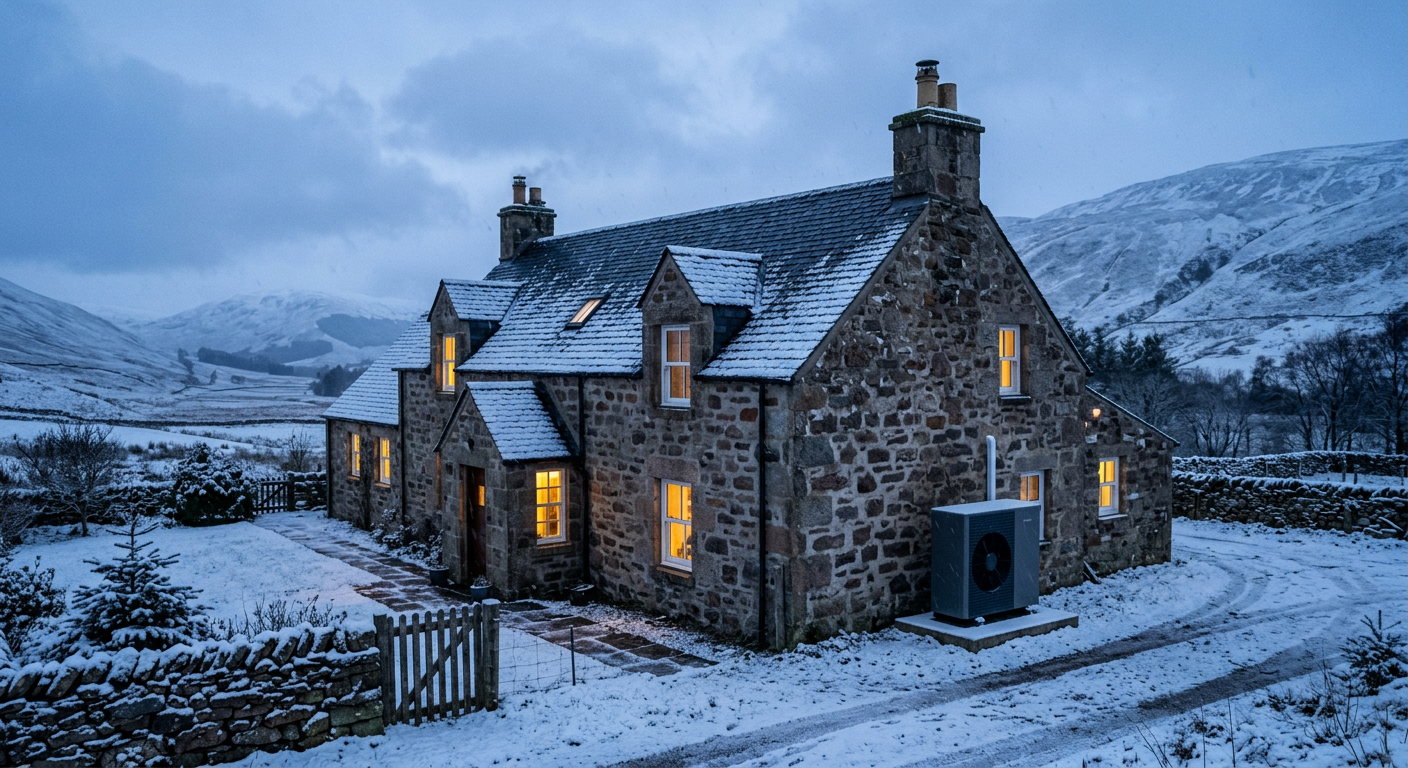
Your First Winter with aHeat Pump in Scotland
Settings, comfort, bills, cold weather performance. What do Scottish homeowners actually report after their first winter with a heat pump? Honest answers.
What Happens Through the Winter
October
Heat pump eases in. Heating demand low. Most homeowners barely notice a difference from their old system at this stage.
November
Heating demand increases. Heat pump running more. Most homeowners report the house feels warmer and more even than before.
December
Cold weather performance tested. Modern units handle this easily. Running costs begin to show the saving vs oil or electric.
January
Typically the coldest month. Heat pump working hard but still efficiently. Scottish average 3°C — well within design range.
February
Second cold month. Homeowners who set the controls correctly are typically very comfortable. Bill comparison with previous years shows clear savings.
March
Temperatures rising. Heat pump efficiency improving. End of first winter — most homeowners report it went better than expected.
Key Settings and How the System Works
Much lower than oil boiler (60–80°C). This is by design — heat pumps are more efficient at lower temperatures.
Heat pumps run for longer periods at lower intensity, unlike boilers which blast on and off. Total running cost is much lower.
Running overnight on cheap-rate tariffs (Economy 7, Octopus Go) can reduce annual costs by 20–30%.
The system automatically prevents freezing. No action needed from you during cold snaps.
Hot water cylinder set to 55–60°C by installer. You typically don't need to adjust this.
Practical Points for Year One
Solid-walled homes can be heated well when the system is sized from a proper heat-loss calculation.
Cold snaps reduce efficiency (COP) but a correctly sized system keeps heating.
Once commissioned, most systems need little adjustment beyond seasonal checks.
Compare winter bills with the same months on your old fuel to judge running costs.
Winter Questions Answered
Will a heat pump keep my Scottish home warm in winter?
Yes. Modern air source heat pumps are rated to operate efficiently at temperatures down to -25°C. Scotland's average January temperature is 3–4°C in most areas (lower in the Highlands but rarely below -10°C for extended periods). The heat pump is designed for Scottish winters.
Why does the heat pump run for longer than my old boiler?
Heat pumps operate at lower flow temperatures (45–50°C vs 70–80°C for oil boilers) and run for longer continuous periods. This is more efficient — think of a slow cooker vs a blast of heat. The total energy used is much less, even though the runtime is longer.
What should I set the thermostat to?
For most Scottish homes: 19–21°C in living areas, 16–18°C in bedrooms. The heat pump will maintain this more consistently than an oil boiler due to the continuous running pattern. Set and forget is the typical approach.
Is there anything I need to do in very cold weather?
Nothing special. The system is designed for cold weather. The outdoor unit may frost over in certain conditions — this is normal and the unit has an automatic defrost cycle. You might hear a slight change in the running sound for a few minutes during defrost.
What happens if we get a cold snap of -10°C or lower?
Modern heat pumps continue to operate in these conditions — the COP (efficiency) reduces but the system keeps heating your home. In extreme cold, a backup electric element (built into the system) may assist. This is rare in Scotland and brief.
Will my electricity bill be higher in winter?
Yes — but significantly less than your old heating bills. Your first winter electricity bills will be higher than summer, but comparing to the same months the previous year on oil or electric, you should see clear savings. Smart tariffs can reduce this further.
When will I really feel the saving vs oil?
Many homeowners first notice it when they get their first winter electricity bill and compare it to their oil spending from the previous year. The annual saving typically becomes clear by March at the end of the first heating season.
What maintenance does the heat pump need in winter?
Very little. Clear snow from around the outdoor unit if significant accumulation occurs. Keep the area around the outdoor unit clear of debris. That's typically all that's required.
Ready for Your First Warm Scottish Winter?
Start the 8–12 week journey today. Free survey, no obligation. Call 0141 230 0198.