How Air Source Heat Pumps Work
A clear, jargon-free explanation of the technology transforming home heating across Scotland. From physics to practicality.
A Fridge Running in Reverse
Instead of cooling something down by removing heat, a heat pump warms your home by extracting heat from outside air and bringing it inside — even when it feels cold.
How the Cycle Works
Click each step to understand the complete heating cycle in detail.
Heat Extraction
From outside air
Outside air is drawn over an evaporator coil containing refrigerant. The refrigerant absorbs heat from the air, even when the air temperature is below freezing. The refrigerant evaporates into a gas as it absorbs this heat.
Key Components Explained
A heat pump system consists of four main components that work together seamlessly.
Outdoor Unit
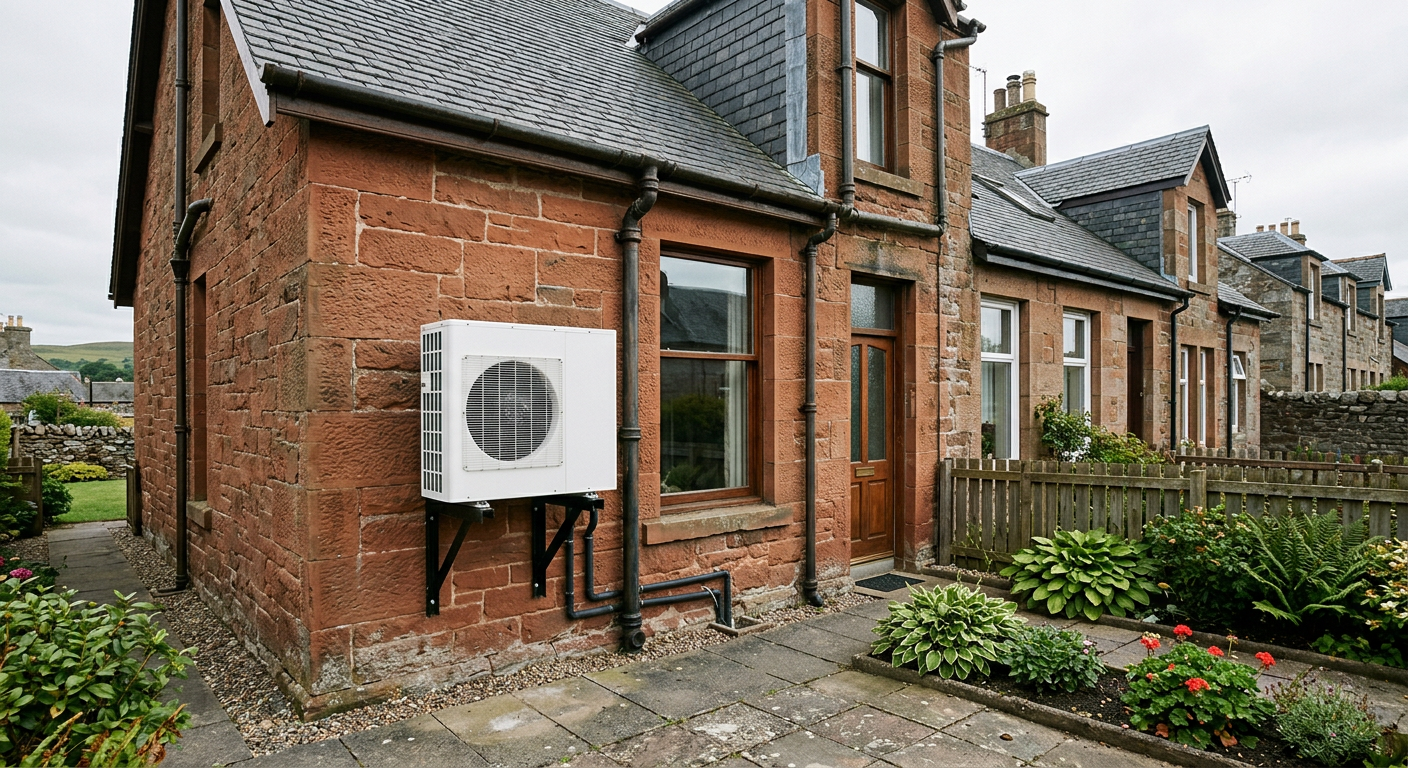
Contains the evaporator coil, compressor, and fan. Typically installed on an external wall or ground-mounted. About the size of a large air conditioning unit.
Usually 80-100cm wide, 50-70cm deep, 80-120cm tall
Hot Water Cylinder
Stores heated water for your taps and potentially for space heating. Modern cylinders are extremely well insulated to minimize heat loss.
Typical size: 180-300 litres depending on household needs
Heat Distribution
Delivers heat throughout your home via underfloor heating, oversized radiators, or specially designed low-temperature radiators.
Works best at 35-50°C (vs 60-80°C for traditional boilers)
Smart Controls
Intelligent controls that optimize performance based on weather, your schedule, and energy tariffs. Many can be controlled remotely via smartphone.
Essential for maximizing efficiency and comfort
Why Heat Pumps Are So Efficient
They Move Heat Rather Than Create It
Traditional boilers burn fuel to generate heat. Heat pumps move existing heat from one place to another, which requires far less energy.
300-400% Efficiency
For every 1 kWh of electricity used, a heat pump typically delivers 3-4 kWh of heat. This is the Coefficient of Performance (COP). Gas boilers are only 85-95% efficient.
No Heat Waste Through Flues
Boilers lose 5-15% of heat through the flue. Heat pumps have no flue, so all the heat produced goes into your home.
Real-World Scottish Example
A typical Scottish home using a heat pump with a COP of 3.5 would use approximately 7,000 kWh of electricity per year for heating, delivering 24,500 kWh of heat.
The same home with oil heating would consume around 2,500 litres of oil per year — costing significantly more.
Is a Heat Pump Right for Your Home?
Now that you understand how heat pumps work, discover if one is right for your Scottish home and how much you could save.